
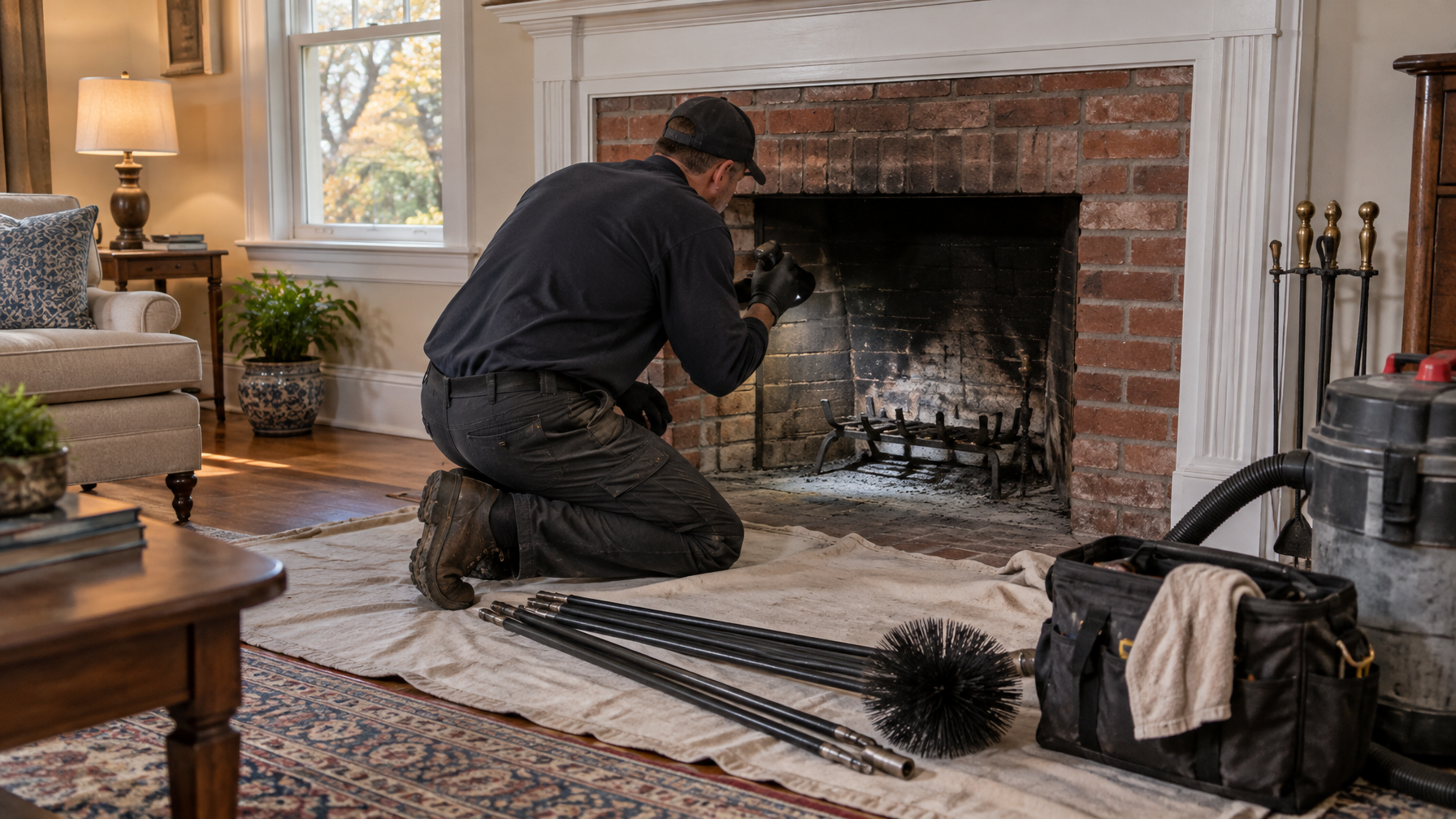
If you need a chimney sweep in Huntington, NY, the first step is to identify what your chimney vents and whether the problem is buildup, a blockage, or damage. SkyFlue Chimney & Fireplace provides chimney sweeping and inspections for Huntington homeowners as part of its Suffolk County service area, with free estimates and photo-documented inspections. Cleaning addresses deposits, while inspection helps determine whether repairs are also needed before the system is used.
Why Huntington Chimneys Need Attention Beyond the Firebox
A fireplace can look tidy while the flue above it contains soot, creosote, or deteriorating liner joints. In older Huntington homes, the visible brick chimney may also serve more than one flue: one for a fireplace and another for a heating appliance. Cleaning one passage does not mean the other has been checked or cleaned.
Long Island’s wet weather and winter freeze-thaw cycles add another concern. Water entering cracked masonry can contribute to loose mortar, flaking bricks, and debris inside the chimney. Around Huntington Harbor and other exposed locations, wind-driven rain can make existing cap, crown, or flashing defects more noticeable. Sweeping removes accessible deposits and debris, but it does not seal those water-entry points.
For homeowners in Huntington village, Huntington Station, and nearby neighborhoods, a useful starting point is a simple service history: when the chimney was last inspected, what fuel it vents, and whether anything has changed since then.
When Should You Schedule a Chimney Sweep?
Have chimneys, fireplaces, and venting systems inspected at least annually, with cleaning performed as the findings require. There is no reliable cleaning interval based only on the number of fires you remember having. Fuel quality, burning habits, flue condition, and appliance operation all affect deposit formation.
Before the heating season
Late summer or early fall is a practical time to arrange service before regular fireplace use. It leaves room to address anything the inspection uncovers, rather than discovering damaged liner sections or a blocked flue on the first cold evening. A fireplace that sat unused all summer is not automatically ready to burn.
When deposits or operating problems appear
- Dark, sticky, or shiny deposits: These may indicate creosote requiring a cleaning approach beyond ordinary brushing.
- Soot falling into the fireplace: Loose deposits or debris warrant a check of the passage above.
- Smoke entering the room: Stop using the fireplace until the cause is evaluated; cleaning alone may not solve it.
- New odors: A smoky smell, especially during humid weather, can point to deposits or moisture but does not establish the cause by itself.
- Unknown maintenance history: An inspection is worthwhile before using a fireplace in a recently purchased or long-unused home.
Do not light a test fire to see whether a suspected blockage clears. If a carbon monoxide alarm sounds, or anyone develops possible exposure symptoms such as headache or dizziness, get everyone outside and call 911. Do not reenter until emergency responders say it is safe.
What a Useful Chimney Sweeping Visit Should Address
Before scheduling professional chimney sweeping, explain which fireplace or appliance needs attention and ask what the proposed service includes. A sweep and an inspection are related, but they are not interchangeable. A clear scope helps prevent assumptions about which flues, appliance connections, or accessible areas will be examined.
Identify the system and symptoms first
Tell the technician whether you have an open wood-burning fireplace, a wood stove or insert, or a chimney serving an oil-fired boiler or furnace. Mention smoke problems, recent leaks, unusual sounds, or previous chimney repairs. With an insert, ask whether access to the liner connection is needed and whether that work is included in the estimate.
Remove deposits with a method suited to their condition
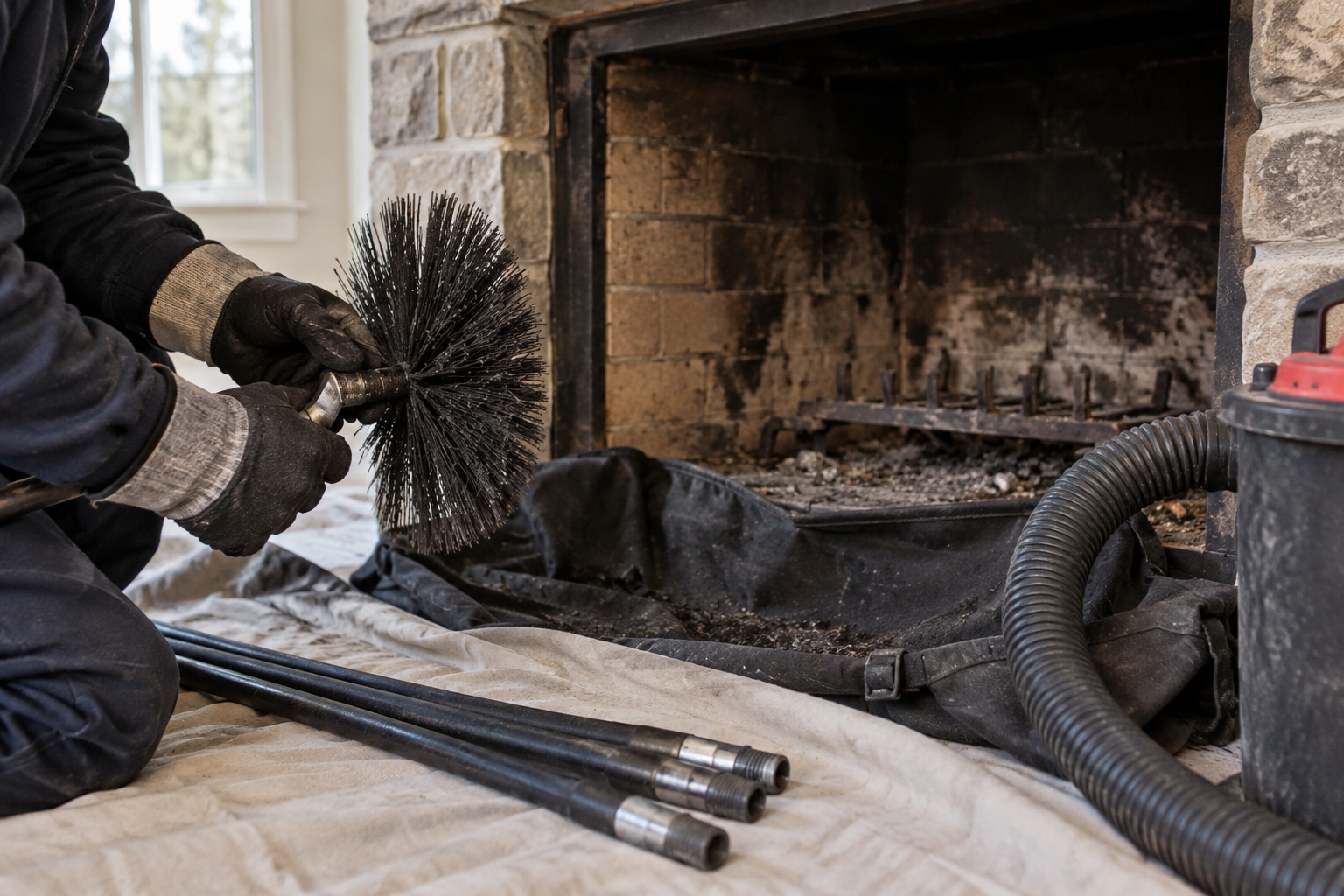
Routine sweeping uses tools selected for the flue’s size, shape, material, and deposit condition. Loose soot and brushable creosote differ from hard, glazed buildup. Glazed creosote may require specialized treatment or additional work; it should not be treated as something a hotter fire will safely burn away.
Ask how the work area will be protected and how dislodged debris will be collected. The goal is to remove buildup without damaging the liner or simply pushing debris into another part of the system.
Review findings, not just whether the chimney was cleaned
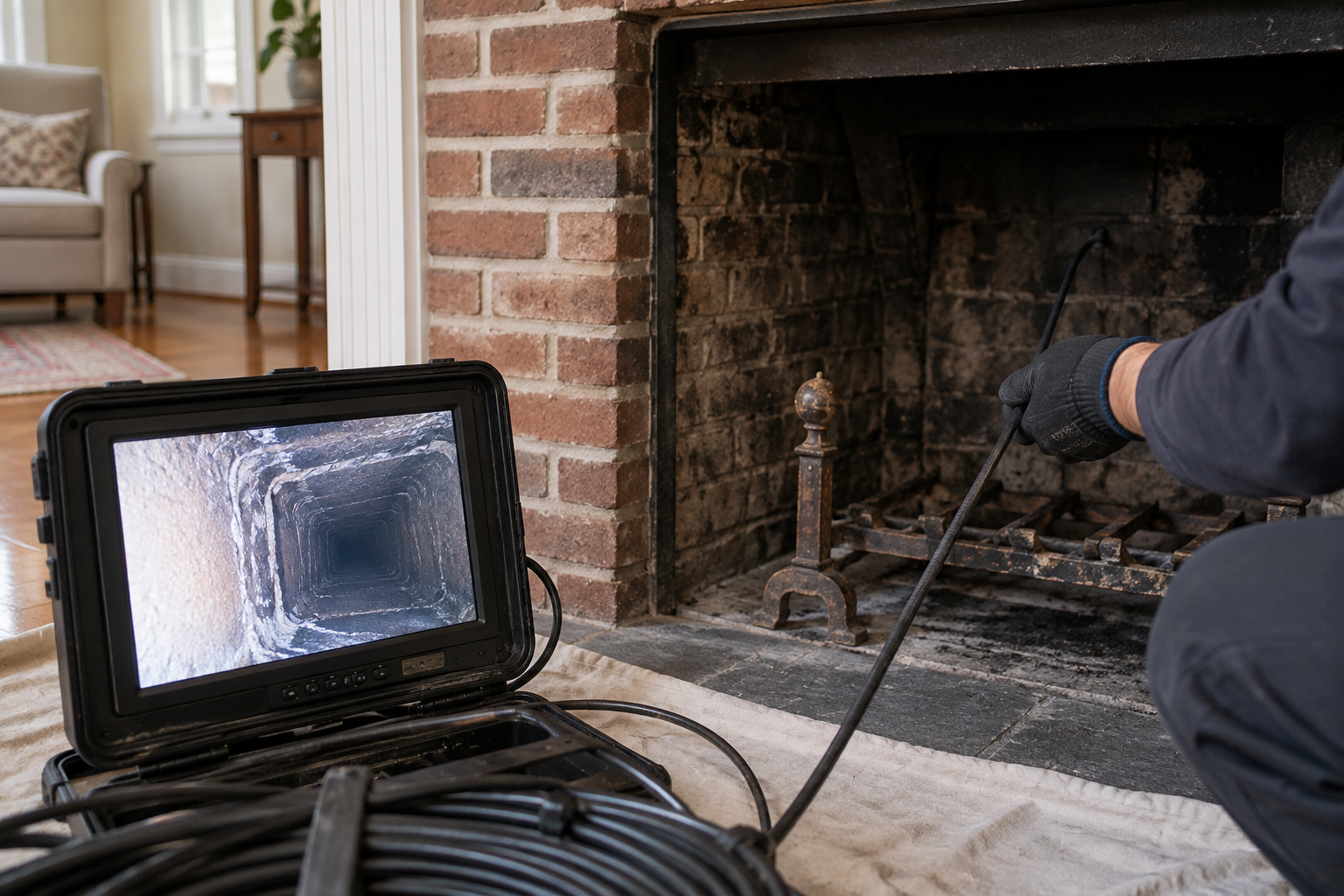
SkyFlue emphasizes photo-documented inspections and clear written estimates. Ask to see the relevant photos or camera footage and have the findings explained in plain language. A useful explanation distinguishes what was removed, what remains, and whether a defect requires further evaluation before use.
When Camera Inspection or a Level 2 Inspection Makes Sense
Looking up from the firebox does not reveal every part of a flue. Internal camera footage can help document accessible liner surfaces, joints, deposits, and visible damage that are difficult to assess from either end. Cameras still have limits: they cannot see through masonry or fully evaluate surfaces obscured by buildup.
A camera examination is a tool, not automatically a complete Level 2 inspection. A Level 2 chimney inspection has a broader scope and is generally appropriate when a property changes hands, when the venting system or connected appliance changes, or after an event that may have damaged the chimney, such as a chimney fire.
If you are buying a Huntington home with a fireplace, ask what inspection documentation is available rather than relying on a statement that the chimney was recently swept. Cleaning records do not establish that the liner is intact or suitable for the appliance it serves.
Problems Sweeping Alone Will Not Fix
A good service recommendation connects the symptom to its actual cause. Sweeping may be part of the solution, but these conditions often require separate evaluation.
Water in the firebox or stains near the chimney
Possible entry points include a missing or damaged cap, a cracked crown, deteriorated mortar joints, and defective flashing where the chimney meets the roof. Note whether the leak appears during every rain or only during wind-driven storms. That history helps guide an inspection, although water can travel before becoming visible indoors.
Waterproofing is not a substitute for repairing open cracks, loose masonry, or failed flashing. The appropriate approach starts with identifying the entry point and correcting defects before considering a suitable water-repellent treatment.
Brick fragments or broken liner pieces
Pieces of masonry in the cleanout or firebox need an explanation. Removing them does not repair the surface they came from. Depending on the findings, the chimney may need masonry restoration, liner work, or further investigation of damage that is not visible from outside.
Persistent smoke or poor draft
A blocked passage can affect draft, but so can a closed or faulty damper, an unsuitable flue configuration, or competing exhaust equipment that depressurizes the house. Tell the technician whether smoke occurs at startup, throughout a fire, or when a kitchen hood or other exhaust fan runs. Do not keep experimenting with fires while smoke enters the living space.
Do Not Overlook the Boiler or Furnace Flue
Some Huntington homes use an oil-fired heating appliance vented through a masonry chimney. Its flue needs attention even if nobody uses the fireplace. Soot, debris, and deteriorating chimney materials can affect the passage that carries combustion gases outdoors.
When requesting service, specify that you need the furnace or boiler flue evaluated. Chimney flue cleaning is not general HVAC repair or a substitute for appliance maintenance. If the equipment itself needs service, that is a separate task. Ask which flue and connection areas are included so the written scope matches the problem you reported.
How to Prepare for Your Appointment
- Let the system cool: Ask SkyFlue how long to avoid fireplace or stove use before the visit. Do not shut down heating equipment without appropriate instructions.
- Clear access: Move furniture and decorations away from the hearth and provide access to any basement cleanout or appliance connection.
- Gather records: Previous inspection reports, repair invoices, and appliance information can help clarify the system’s history.
- Document patterns: Save photos of leaks or fallen debris taken safely from ground level. Note weather conditions and when symptoms occur.
- Review the estimate: Confirm which flues are covered and whether camera work, specialized creosote removal, or repairs are separate items.
Leave roof access and internal chimney evaluation to professionals. If you suspect an active chimney fire, evacuate and call 911 before contacting a repair company. SkyFlue offers 24/7 emergency chimney repair, but emergency repair service does not replace fire-department response. Do not resume use after a suspected chimney fire until the system has been evaluated and necessary repairs completed.
Schedule Chimney Sweeping in Huntington, NY
Whether you are preparing for fireplace season or investigating soot, leaks, or poor draft, start with a clear description of the problem and a documented assessment. SkyFlue Chimney & Fireplace serves Huntington and the surrounding Suffolk County area with sweeping, inspections, and chimney repairs, supported by inspection photos and clear written estimates.
Call Now (934) 271-0372 or Get a Free Estimate. Tell us what your chimney vents, when it was last serviced, and what you have noticed so the proposed work addresses the right system.
Frequently Asked Questions
How often should I have my Huntington chimney swept?
Arrange an inspection at least annually, then have cleaning performed when deposits or other findings indicate it is needed. Frequent wood burning, fuel quality, and system condition can affect how quickly buildup forms.
Does chimney sweeping include a Level 2 inspection?
Not automatically. Sweeping removes deposits, while a Level 2 inspection has a broader evaluation scope. Ask which inspection services and camera work are included in your written estimate.
Can sweeping stop smoke from coming into my living room?
It may help if deposits or a blockage are the cause, but smoke can also result from damper problems, venting configuration, or household pressure conditions. Stop using the fireplace until the cause is evaluated.
Does an oil boiler chimney need cleaning if I never use the fireplace?
Yes, the boiler flue needs its own inspection and cleaning as indicated. It may be a separate passage from the fireplace flue. Chimney flue service does not replace maintenance or repair of the heating appliance itself.
Does SkyFlue provide chimney sweeping in Huntington, NY?
Yes. SkyFlue serves Huntington as part of its Suffolk County service area, offering chimney sweeping, inspections, and repairs. Call (934) 271-0372 to discuss your system and request a free estimate.