
Creosote Removal in Queens & Long Island
Creosote is the tar-like residue wood smoke leaves inside the flue, and it's highly flammable. Light, flaky buildup comes off with a sweep; hardened or glazed creosote needs specialized tools or chemical treatment.
What is creosote removal?
Creosote is the residue wood smoke leaves on the inside of the flue. It's commonly described in three stages: first-stage is a light, flaky soot; second-stage is crunchy, tar-like flakes; third-stage is a hard, shiny glaze that's very difficult to remove and highly flammable.
First-stage creosote comes off with a normal sweep. Second- and third-stage buildup needs more aggressive mechanical tools or chemical treatments that convert the glaze into something that can be swept out.
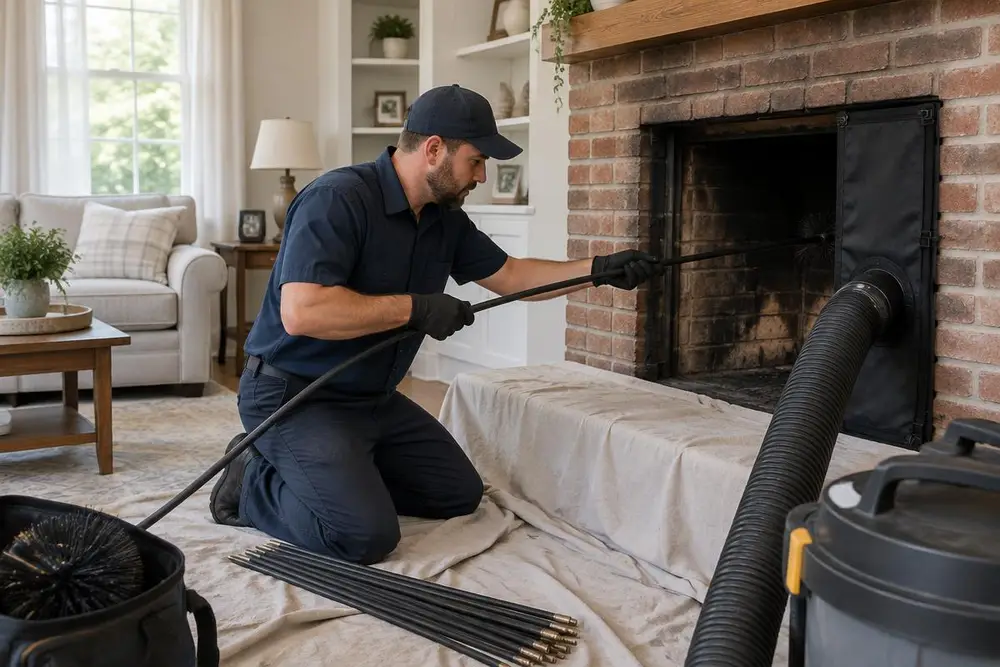
Warning signs
- Thick black buildup visible above the damper
- A shiny or tar-like coating in the flue
- Strong smoky smell from the fireplace
- Burning unseasoned wood
- Slow, smoky fires
How SkyFlue does it
- 1Identify the stageWe look at the buildup and, if needed, scan with a camera.
- 2Choose the methodSweeping, rotary tools or chemical treatment depending on the stage.
- 3RemoveOne or more visits depending on how heavy the glaze is.
- 4VerifyA camera check confirms the flue is clear.
What affects the scope
- Creosote stage and thickness
- Flue material (clay tile or stainless)
- Whether multiple treatments are needed
- Damage found once the creosote is gone
When to call
Call right away if you see glazed creosote, and don't use the fireplace until it's removed.
Call (934) 271-0372Creosote Removal FAQ
What are the stages of creosote?+
First-stage is light, flaky soot. Second-stage is crunchy, tar-like flakes. Third-stage is a hard, shiny glaze that's very flammable and hard to remove.
Can a normal sweep remove glazed creosote?+
Usually not. Third-stage glaze typically needs rotary tools or a chemical treatment followed by sweeping.
What causes heavy creosote?+
Burning wet or unseasoned wood, smoldering fires with the damper mostly closed, and flues that are too large or too cold.
Is it safe to use my fireplace with glazed creosote?+
No. Don't use it until the creosote is removed.