Chimney Relining in Queens & Long Island
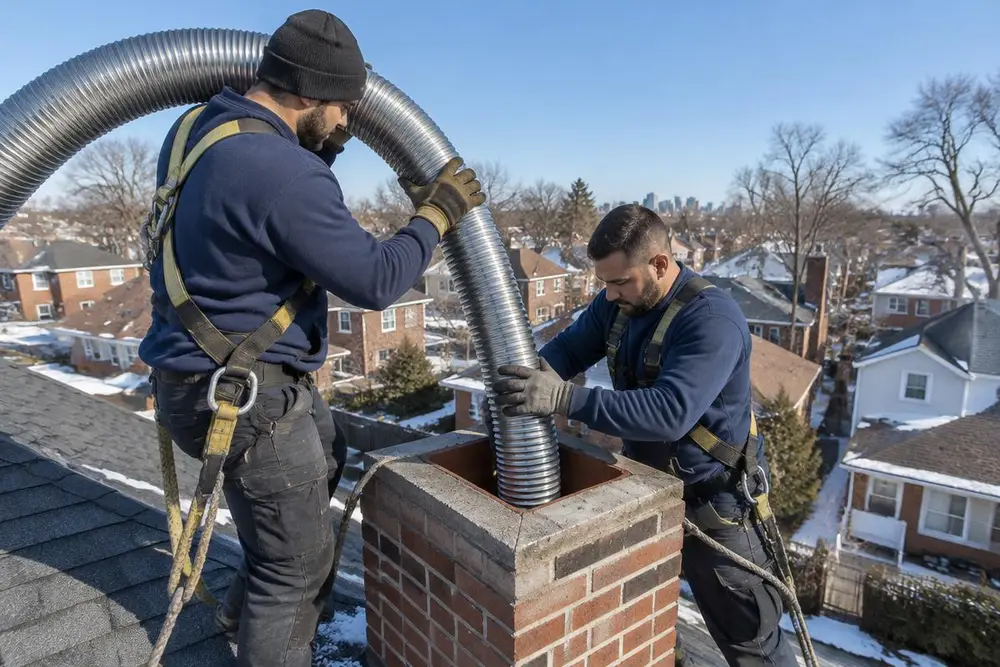
Relining replaces a damaged or wrong-sized liner — most often cracked clay tiles or a flue that no longer suits a new appliance. It's frequently needed when a home converts from oil to gas, since gas exhaust is more corrosive to old clay flues.
What is chimney relining?
Relining replaces a liner that's damaged or no longer right for the appliance. The most common cases are cracked clay tiles and fuel conversions.
When a home switches from oil to gas, the exhaust is cooler and more acidic, and condensation can attack old clay flues and mortar. A correctly sized stainless steel liner is often needed for the new appliance.
Warning signs
- Cracked or broken flue tiles
- Switching from oil to gas
- Replacing a boiler or water heater
- Tile pieces at the chimney base
- After a chimney fire
How SkyFlue does it
- 1Camera inspectionWe document the existing liner.
- 2Size for the new applianceBased on the appliance's requirements.
- 3Clear written estimateYou get a written estimate describing the work before anything starts.
- 4RelineInstall the new liner and connections.
- 5VerifyCamera and draft check after installation.
What affects the scope
- Flue condition
- Appliance type and size
- Number of offsets
- Whether old tiles need removal
When to call
Call before or when switching fuels, replacing a heating appliance, or after an inspection finds damaged tiles.
Call (934) 271-0372Chimney Relining FAQ
Why does switching from oil to gas affect my chimney?+
Gas exhaust is cooler and more acidic. Condensation can damage old clay flues, so a properly sized liner is often needed.
Can cracked clay tiles be repaired?+
Minor joint gaps sometimes can. Cracked or missing tiles usually mean relining.
How do you know what size liner I need?+
It's based on the appliance's requirements and the chimney's height.
Will I see the before-and-after?+
Yes, camera footage before and after relining.