Chimney Liner Installation in Laurelton, NY
A chimney liner protects the masonry from heat and corrosive exhaust and gives the appliance a properly sized flue. We install stainless steel liners sized for your fireplace, wood stove, boiler or furnace.
Chimneys in Laurelton
Laurelton has many Tudor-style and colonial homes from the 1920s and 1930s, often with fireplaces. Older masonry chimneys here commonly need repointing and new crowns.
About chimney liner installation
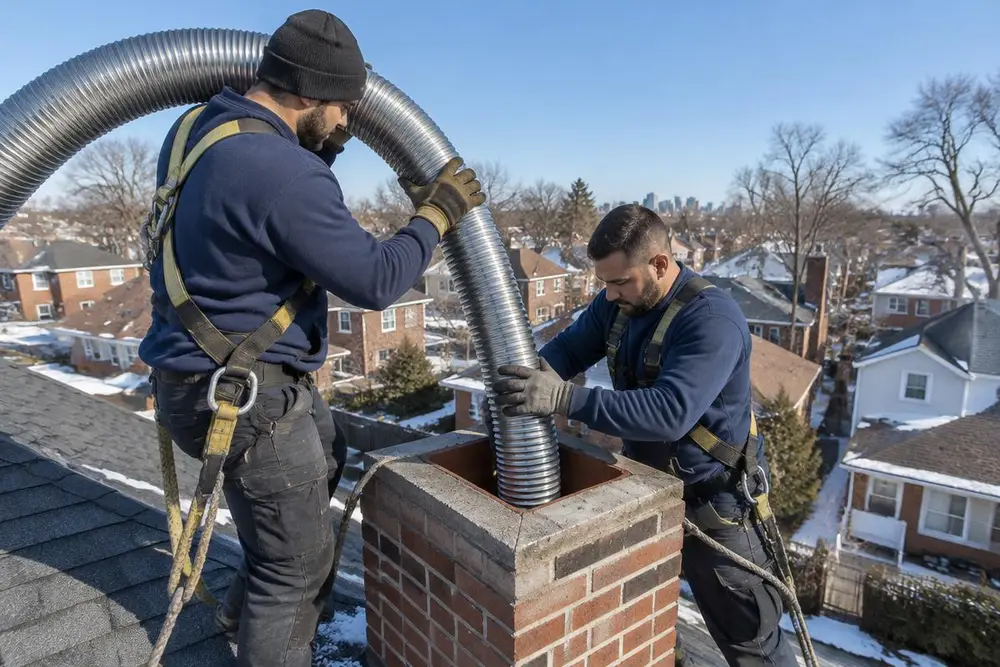
A chimney liner is the inner wall of the flue. It contains heat and exhaust, protects the masonry from corrosive byproducts and gives the appliance a flue of the right size so it drafts properly.
Signs you need it
- An inspection found cracked or missing flue tiles
- A new boiler, furnace or stove is being installed
- Converting from oil to gas
- After a chimney fire
- Draft or condensation problems
How we handle it in Laurelton
- 1. Camera inspection. We confirm the condition of the existing flue.
- 2. Size the liner. Matched to the appliance's requirements.
- 3. Clear written estimate. You get a written estimate describing the work before anything starts.
- 4. Install. Liner, connections, insulation if needed, top plate and cap.
- 5. Verify. We check the installation and draft.
Call before installing or replacing a heating appliance or stove, or when an inspection finds flue damage.
Chimney Liner Installation in Laurelton: FAQ
Do you offer chimney liner installation in Laurelton?+
Yes. SkyFlue Chimney & Fireplace serves Laurelton and the rest of Queens. Call (934) 271-0372 or request a free estimate.
Does my chimney need a liner?+
Most chimneys venting fireplaces, stoves or heating appliances need a sound, properly sized liner.
What types of liners are there?+
Clay tile, cast-in-place and metal (usually stainless steel) liners. We install stainless steel liners.
Why does liner size matter?+
A flue that's too big or too small for the appliance can cause poor draft, condensation and creosote.
Do new boilers need new liners?+
Often, especially when switching fuel or when the new appliance has different venting requirements.