
Chimney Liner Installation in Smithtown, NY
A chimney liner protects the masonry from heat and corrosive exhaust and gives the appliance a properly sized flue. We install stainless steel liners sized for your fireplace, wood stove, boiler or furnace.
Chimneys in Smithtown
Smithtown has colonials and splits on wooded lots, many with wood-burning fireplaces. Creosote buildup, animals and crown wear are common issues.
About chimney liner installation
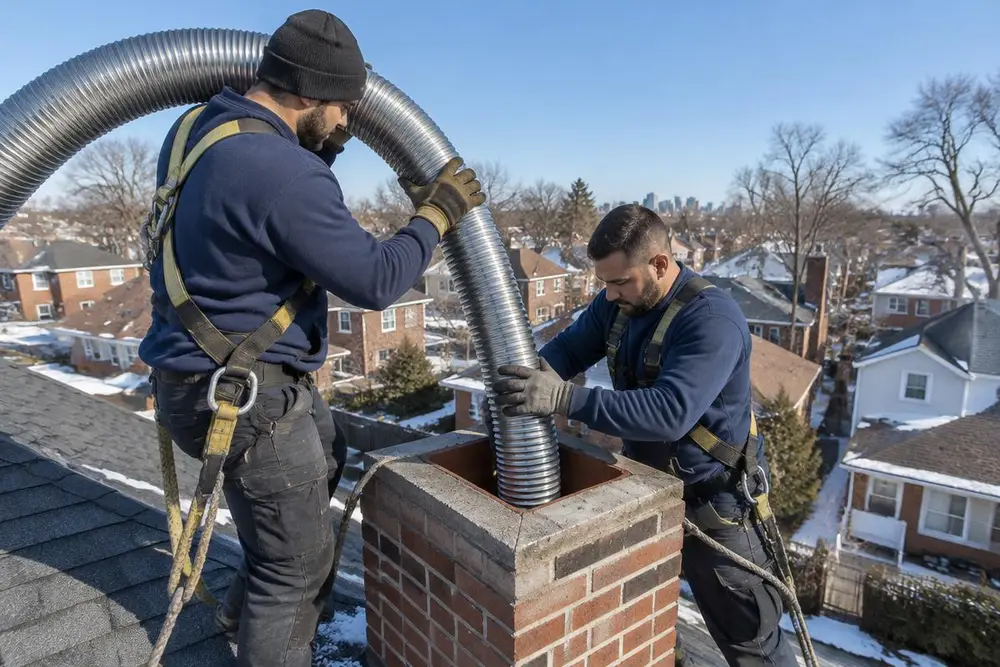
A chimney liner is the inner wall of the flue. It contains heat and exhaust, protects the masonry from corrosive byproducts and gives the appliance a flue of the right size so it drafts properly.
Signs you need it
- An inspection found cracked or missing flue tiles
- A new boiler, furnace or stove is being installed
- Converting from oil to gas
- After a chimney fire
- Draft or condensation problems
How we handle it in Smithtown
- 1. Camera inspection. We confirm the condition of the existing flue.
- 2. Size the liner. Matched to the appliance's requirements.
- 3. Clear written estimate. You get a written estimate describing the work before anything starts.
- 4. Install. Liner, connections, insulation if needed, top plate and cap.
- 5. Verify. We check the installation and draft.
Call before installing or replacing a heating appliance or stove, or when an inspection finds flue damage.
Chimney Liner Installation in Smithtown: FAQ
Do you offer chimney liner installation in Smithtown?+
Yes. SkyFlue Chimney & Fireplace serves Smithtown and the rest of Suffolk County. Call (934) 271-0372 or request a free estimate.
Does my chimney need a liner?+
Most chimneys venting fireplaces, stoves or heating appliances need a sound, properly sized liner.
What types of liners are there?+
Clay tile, cast-in-place and metal (usually stainless steel) liners. We install stainless steel liners.
Why does liner size matter?+
A flue that's too big or too small for the appliance can cause poor draft, condensation and creosote.
Do new boilers need new liners?+
Often, especially when switching fuel or when the new appliance has different venting requirements.