

If you need chimney cleaning in Smithtown, NY, start with service that considers both the buildup inside the flue and the condition of the venting system. SkyFlue Chimney & Fireplace serves Smithtown and surrounding Suffolk County communities with chimney sweeping, inspections, and repairs, using inspection photos and clear written estimates to explain the work recommended.
Whether your chimney serves a wood-burning fireplace, a wood stove, or an oil-fired heating appliance, the goal is the same: remove deposits where needed and identify problems that cleaning alone cannot fix.
Why Chimney Maintenance Matters in Smithtown Homes
Smithtown’s mix of older masonry chimneys and newer fireplace installations calls for more than a one-size-fits-all cleaning. An older chimney may have worn mortar or damaged clay flue tiles, while a newer installation can still develop deposits, obstructions, or water-entry problems. The appliance, fuel, liner, and maintenance history all influence what needs attention.
Long Island’s wet weather and winter freeze-thaw cycles also affect exposed chimney masonry. Water entering small cracks can freeze and expand, worsening deterioration. Meanwhile, a fireplace used heavily during cold spells can accumulate combustible creosote. These are different problems: sweeping addresses deposits, while water damage requires a separate diagnosis.
Homes with oil-fired boilers or furnaces need attention to their exhaust pathways too. A clean fireplace does not establish that a separate heating-appliance flue is clear or sound, even when both flues are inside the same chimney structure.
When Should You Schedule Chimney Cleaning?
Plan an annual chimney inspection, with cleaning performed as needed based on deposits, use, and condition. There is no reliable way to set a cleaning interval from the number of fires alone. Wood moisture, burning habits, flue temperatures, and appliance performance all affect buildup.
Before the Heating Season
Late spring and summer are useful times to arrange maintenance because they leave time to address defects before colder weather. If you missed that window, do not assume you need to wait until next year. An unfamiliar maintenance history, visible buildup, or a change in fireplace behavior warrants attention before continued use.
After Changes or Warning Signs
- You moved into the home: Previous use and maintenance may be unclear, even if the fireplace looks tidy.
- Smoke enters the room: Stop using the fireplace until the cause is identified. Deposits are only one possible explanation.
- You notice a strong smoky odor: Creosote, moisture, and airflow conditions can contribute; odor alone does not identify the cause.
- Debris appears in the firebox: Soot, masonry fragments, or nesting material calls for an inspection.
- A storm damaged the chimney: A shifted cap or damaged masonry may affect safe operation.
If a carbon monoxide alarm sounds, or anyone develops possible exposure symptoms such as headache or dizziness, leave the home and call 911 from outside. For a suspected active chimney fire, evacuate and call 911 rather than waiting for a service appointment.
What a Chimney Cleaning Visit Should Address
A useful service visit begins with questions: What does the chimney vent? When was it last inspected? Have you noticed smoke, odors, water, or falling debris? Tell the technician about previous repairs and whether more than one appliance uses the chimney structure.
Access, Protection, and Deposit Removal
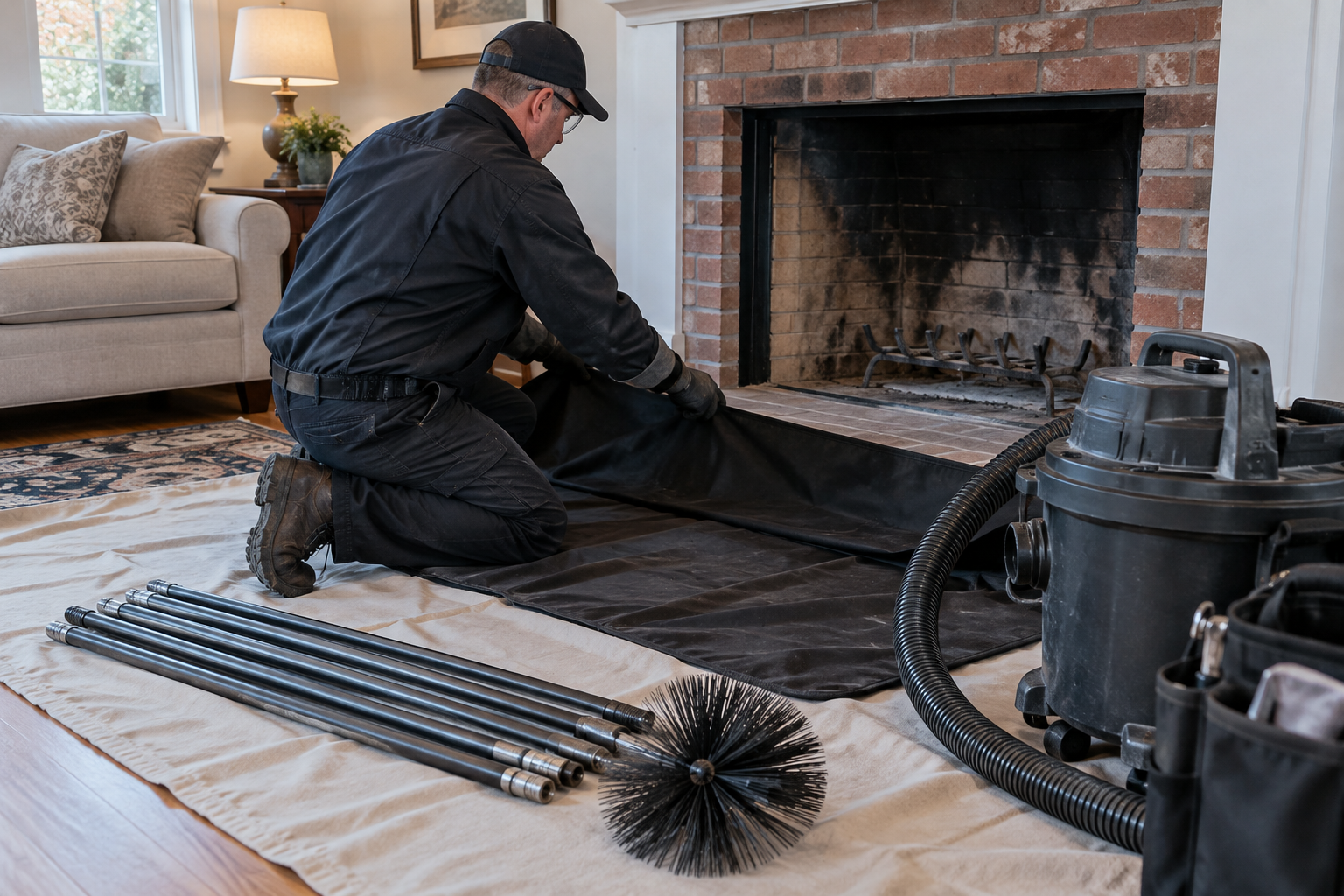
Before work begins, clarify which fireplace, stove, or heating-appliance flue is included. The service plan should account for safe access, protection around the work area, and containment of loosened soot. Sweeping uses tools suited to the flue and deposits, followed by removal of accessible loosened material.
SkyFlue’s chimney sweeping service addresses routine cleaning needs, but the condition of the chimney determines whether additional work is appropriate. Ask what areas are included and whether an inspection is part of the proposed scope.
Recognizing Creosote That Needs Additional Treatment
Wood smoke can leave creosote ranging from loose deposits to dense, hard, glazed material. Not every deposit responds to ordinary brushing. If hardened buildup remains, the technician should explain the findings and recommend an appropriate removal approach rather than describe an incomplete sweep as a finished solution.
Cleaning also cannot restore cracked flue tiles, replace missing mortar, or correct an improperly configured vent. If defects become visible during service, they should be documented and discussed separately from the cleaning itself.
Useful Documentation
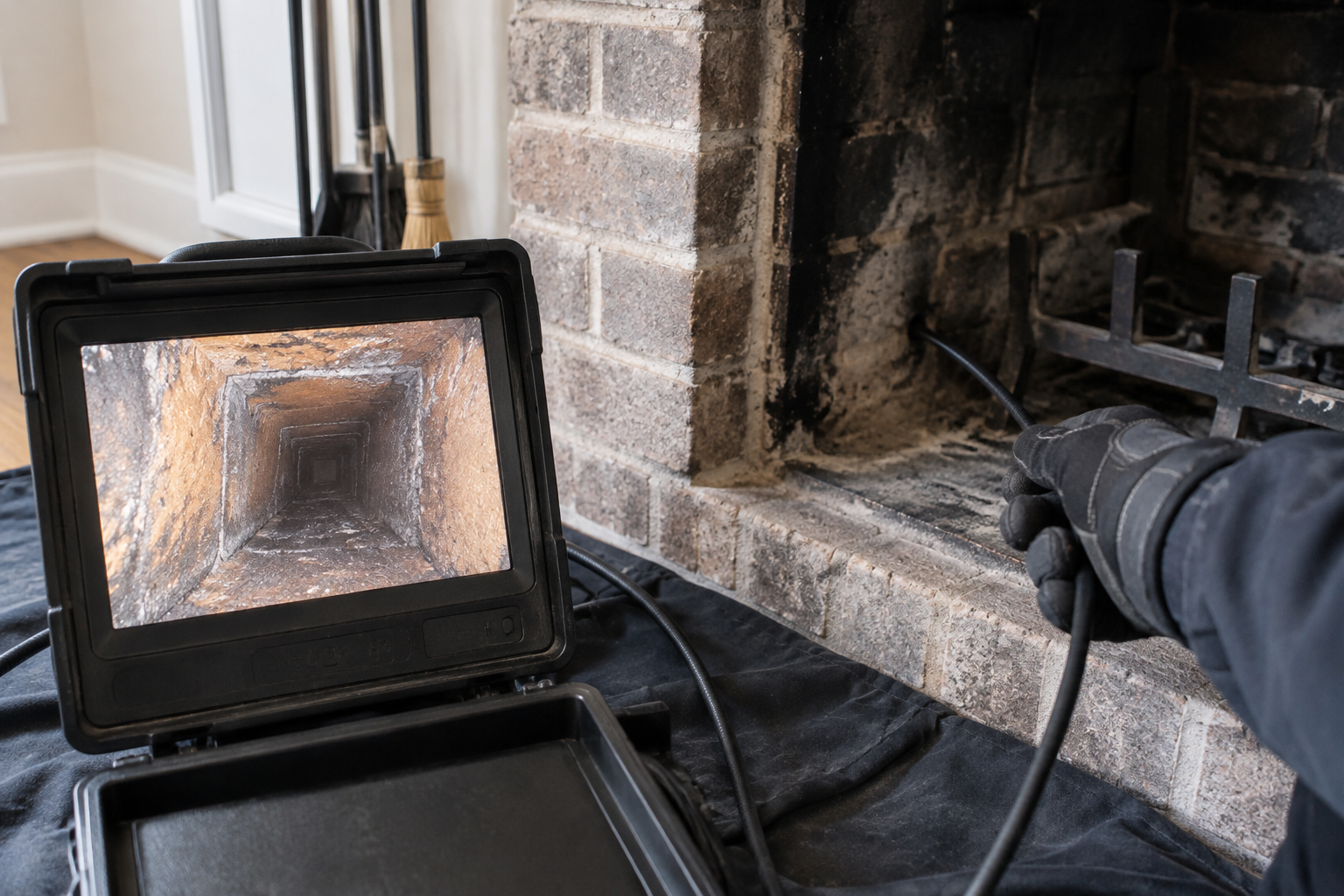
Ask to see where buildup or damage was found, not just a general description that the chimney is “bad.” SkyFlue emphasizes photo-documented inspections and clear written estimates. For areas examined by camera, footage can help explain internal findings that are not visible from the firebox.
When Is a Camera or Level 2 Inspection Appropriate?
A camera inspection helps examine interior flue surfaces that cannot be viewed adequately from accessible openings. It can reveal visible cracks, separated liner joints, deposits, and obstructions. It does not expose every concealed condition, and the findings still need to be interpreted in the context of the whole system.
A Level 2 inspection is broader than simply putting a camera into a chimney. It generally includes examination of accessible portions of the chimney and connected appliance system, along with internal video scanning or an equivalent method. Common reasons include a home sale or transfer, certain appliance or venting changes, and an event likely to have caused damage.
For a Smithtown home purchase or a chimney with a suspected fire history, ask whether a Level 2 chimney inspection is appropriate. A routine cleaning receipt is not a substitute for evaluating the system’s condition.
Fireplace Flues and Oil-Heating Flues Need Different Attention
A wood-burning fireplace or stove can produce creosote along with soot. An oil-fired boiler or furnace has different operating conditions and can leave soot in its exhaust pathway. In either case, the inspection should consider the liner, accessible connections, deposits, and signs of deterioration.
Do not assume one flue has been serviced because another was cleaned. When requesting an estimate, specify whether you need fireplace cleaning, stove-flue cleaning, heating-appliance flue cleaning, or evaluation of multiple flues.
SkyFlue offers furnace and boiler flue cleaning. This is chimney and exhaust-path maintenance, not general HVAC repair or a substitute for servicing the heating appliance itself. If an appliance is producing excessive soot, its operating condition may also require evaluation by the appropriate heating-service professional.
Problems That Sweeping Alone Will Not Solve
The right recommendation depends on the actual cause. If your complaint is water staining or smoke entering the room, cleaning may be part of the answer, but it should not be presented as an automatic cure.
- Water around the fireplace: Possible entry points include the cap, crown, masonry, and chimney flashing. The source needs to be traced before selecting repairs.
- Flaking brick faces: Spalling can indicate moisture-related deterioration. Sweeping does not repair damaged brickwork.
- Persistent poor draft: Obstructions, vent configuration, cold flue conditions, or household air-pressure issues may contribute.
- Damaged liner surfaces: A clean flue can still have defects that require repair before use.
For exposed chimneys in Smithtown and nearby Long Island communities, waterproofing may be useful after necessary masonry repairs. It is not a replacement for fixing open joints, a broken crown, or faulty flashing. Ask for photos supporting each recommendation and a written explanation of what the proposed repair addresses.
How to Prepare for Your Appointment
Let the fireplace or stove become completely cold before the visit, and confirm the company’s preparation instructions when scheduling. Move furniture, rugs, and fragile belongings away from the work area, and keep pets and children clear during service.
Have previous inspection reports available if you have them. Note when problems occur: only during rain, on windy days, at startup, or while an exhaust fan is running. These details help narrow the investigation. Do not climb onto the roof or light a test fire to demonstrate a suspected unsafe condition.
Get a Free Estimate for Chimney Cleaning in Smithtown
SkyFlue Chimney & Fireplace serves Smithtown, Suffolk County, Nassau County, and Queens with cleaning, inspections, and root-cause chimney repairs. Ask for a clear scope of work, inspection photos, and a written estimate so you understand what needs cleaning and whether anything else requires attention.
Call Now (934) 271-0372 or Get a Free Estimate. SkyFlue also offers 24/7 emergency chimney repair; active fires and carbon monoxide emergencies should always be directed to 911 first.
Frequently Asked Questions
How often should I have my Smithtown chimney cleaned?
Arrange an annual inspection and have cleaning performed as needed. Deposit buildup varies with fuel, frequency of use, burning habits, and flue condition, so a fixed calendar interval does not fit every home.
Does chimney cleaning include a Level 2 inspection?
Do not assume it does. Cleaning removes deposits, while a Level 2 inspection evaluates accessible portions of the system and includes internal video scanning or an equivalent method. Ask for the inspection scope to be identified in your estimate.
Can chimney sweeping fix smoke coming into my house?
It may help if deposits or an obstruction are contributing, but smoke can also result from draft, venting, or household air-pressure problems. Stop using the fireplace until the cause has been evaluated.
Does an oil-fired boiler chimney need cleaning?
Its flue should be inspected and cleaned when deposits or conditions warrant it. Boiler flue cleaning addresses the exhaust pathway; it does not include general HVAC repairs or replace maintenance of the boiler itself.
Does SkyFlue provide chimney cleaning estimates in Smithtown?
Yes. SkyFlue serves Smithtown as part of its Suffolk County service area and offers free estimates. Call (934) 271-0372 to discuss the appliance, chimney concerns, and service you need. A free estimate does not necessarily mean the inspection or cleaning is free.