
A ceiling stain next to the chimney, a drip in the firebox during a storm, damp wallpaper on the chimney breast — chimney leaks are among the most common calls we get in Queens and on Long Island. The frustrating part is that several different problems can produce exactly the same stain inside. Fixing the wrong one is why so many chimney leaks "come back."
Here are the seven causes we see most, roughly in order of how often they're the culprit.
1. Failed flashing
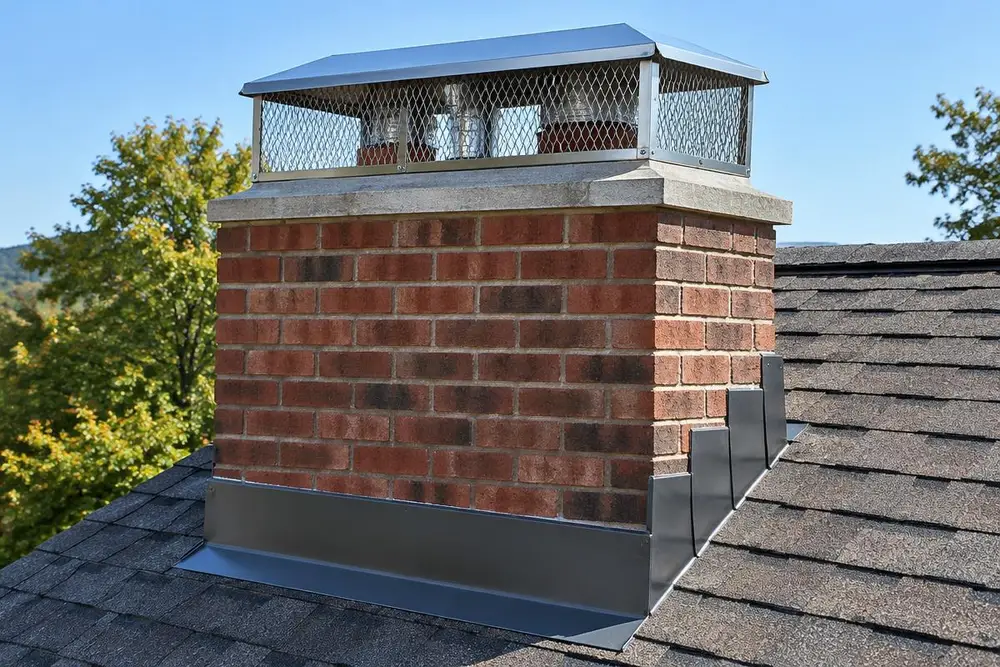
Flashing is the metal that seals the joint where the chimney passes through the roof. A proper installation uses step flashing woven into the shingles and counter flashing set into the chimney's mortar joints. Many chimneys instead have a single layer of bent metal held on with tar or caulk. That seal cracks with age and sun, and wind-driven rain goes straight in.
Fix: replace patched or failed flashing with step and counter flashing set into cut mortar joints. See chimney flashing repair.
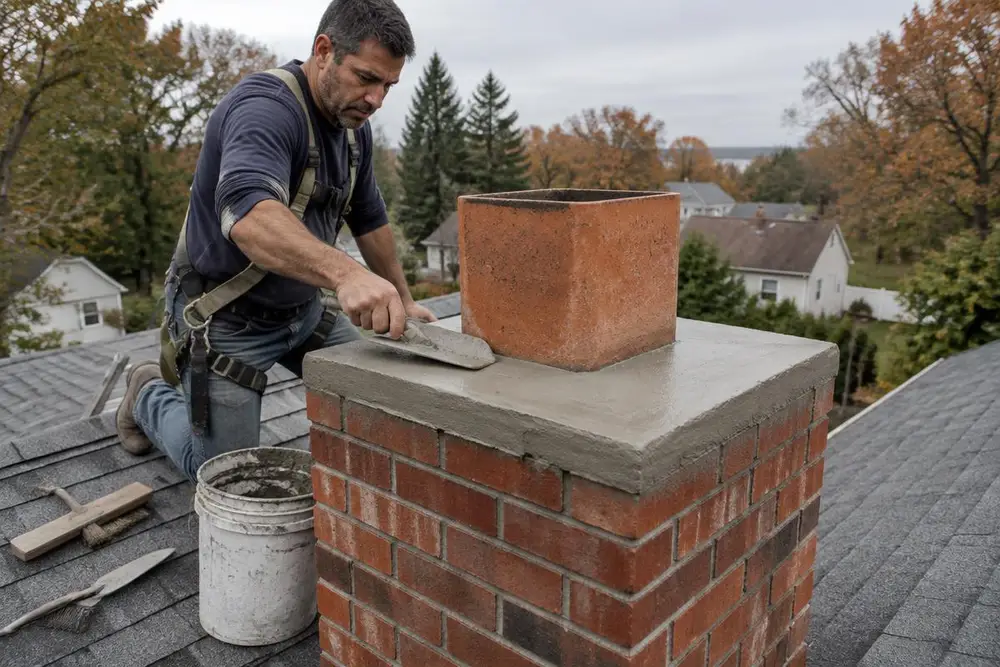
2. A cracked or poorly built crown
The crown is the slab at the top of a masonry chimney that sheds water away from the brick. Many are built as a thin layer of mortar with no overhang, and freeze-thaw cycles open cracks in them within a few winters. Water then soaks down into the masonry and shows up anywhere below.
Fix: seal hairline cracks with a flexible crown coating, or replace a failing crown with one that has proper slope and an overhang. See chimney crown repair.
3. No chimney cap (or a damaged one)
An uncapped flue is an open pipe into your house. Rain falls straight down the flue into the firebox, mixes with soot and creates a musty smell, and can rust the damper. Rusted, bent or loose caps leak too.
Fix: install a properly sized cap. On chimneys with more than one flue, a multi-flue cap covers the whole crown. See chimney cap installation.
4. Worn mortar joints
Mortar is meant to wear out before the brick does. When joints erode, they become channels for water. On older Queens row houses and Long Island Capes, it's common to find whole sections of a chimney where the mortar has washed out.
Fix: repoint the joints with mortar that's compatible with the brick. See tuckpointing and repointing.
5. Porous or spalling brick
Brick absorbs water. In a heavy rain, a chimney can soak up a surprising amount, which then moves inward. Once water freezes inside the brick, faces start to flake off (spalling), making the problem worse.
Fix: replace damaged brick, then consider a breathable, vapor-permeable masonry water repellent. Avoid paint or non-breathable sealers, which trap moisture. See chimney waterproofing and spalling brick repair.
6. Condensation inside the flue
Not every "leak" is rain. When a boiler or water heater vents into a flue that's too large or too cold — common after switching from oil to gas — exhaust cools and condenses inside the chimney. The water is acidic and can stain walls and break down clay tiles and mortar.
Fix: a correctly sized liner for the appliance. See chimney relining.
7. No cricket on a wide chimney
On chimneys wider than about 30 inches, water and debris pile up on the uphill side. A cricket (or saddle) is a small peaked structure that diverts water around the chimney. Without one, that pocket is a common leak point.
Fix: build a cricket and flash it properly as part of flashing repair.
How we trace a chimney leak
- Look at the stain inside and when it appears — every storm, only wind-driven rain, or in cold weather without rain (condensation).
- Inspect the crown, cap, flashing and masonry from the roof and photograph each.
- Check the inside of the flue and firebox for water, rust and staining.
- Recommend the repair for the actual entry point — not a coat of tar over everything.
What to do right now
If water is actively coming in, put a bucket under it, move belongings away and avoid using the fireplace. If the leak is near light fixtures or electrical outlets, turn off that circuit. We're available 24/7 for active leaks — see 24/7 emergency chimney repair.
We fix chimney leaks throughout Queens and Long Island. Learn more about chimney leak repair.