Ask ten people how often a chimney should be cleaned and you'll get answers from "every year" to "never, I don't really use it." The honest answer is that it depends — on what the chimney vents, how often it's used and what's actually building up inside the flue. Here's how to think about it if you own a home in Queens or on Long Island.
What the industry guidance says
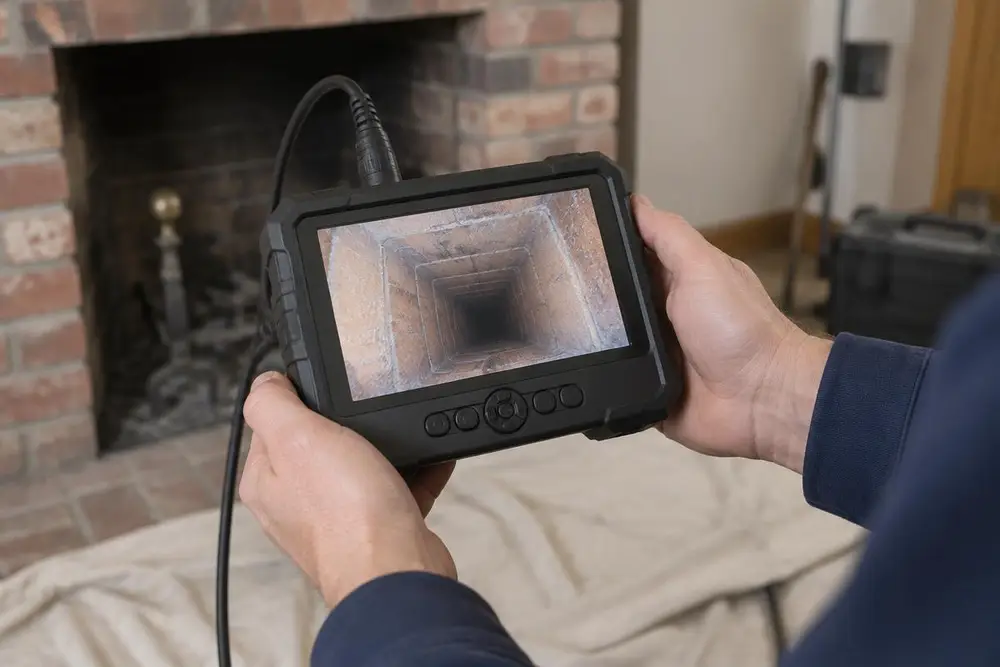
The most widely cited reference is NFPA 211, the National Fire Protection Association's standard for chimneys, fireplaces, vents and solid-fuel appliances. It recommends that chimneys, fireplaces and vents be inspected at least once a year, and cleaned when needed. That's an important distinction: the annual requirement is for an inspection; cleaning is done when the inspection shows it's necessary.
The Chimney Safety Institute of America (CSIA), an industry education organization, gives similar general guidance and commonly points to about 1/8 inch of soot or creosote buildup as the point where a fireplace flue should be cleaned. Below that, a sweep may not be needed yet. Above it, buildup can restrict draft and becomes a fire risk.
So the rule of thumb is: inspect every year, clean when the inspection says so. For most households that use a wood-burning fireplace regularly through the winter, that works out to roughly once a year. For heavy wood burners, it can be more.
Wood-burning fireplaces and stoves
Wood smoke leaves creosote — a sticky, flammable residue — on the inside of the flue. How fast it builds up depends on several things:
- How often you burn. A fire every weekend all winter is very different from a few fires around the holidays.
- What you burn. Dry, seasoned hardwood burns hotter and cleaner. Green or wet wood smolders and produces much more creosote.
- How you burn. Fires that smolder with the damper or air supply mostly closed create more buildup than hot, well-ventilated fires.
- The flue itself. Oversized or cold flues — common on exterior chimneys in our winters — let smoke cool and condense faster.
- The appliance. Wood stoves and inserts can build creosote quickly, especially when they're run low and slow overnight.
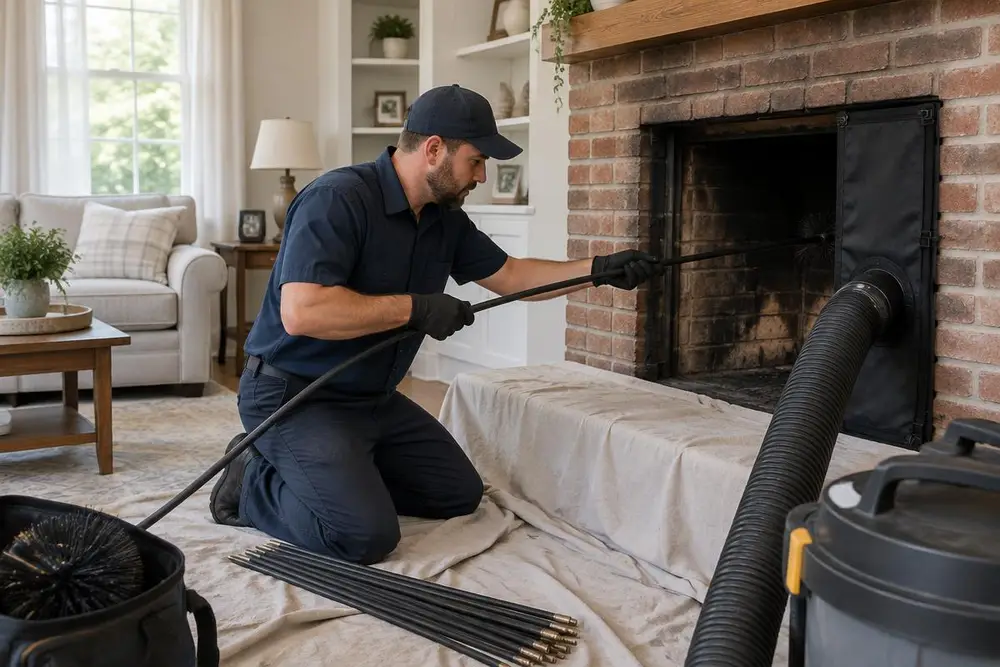
If you burn wood regularly, plan on an inspection and sweep before the season starts. If you burn heavily, a mid-season check is worth it. You can learn more about our chimney sweep and chimney cleaning services.
Oil and gas heating flues
Many chimneys in Queens and on Long Island don't vent a fireplace at all — they vent the boiler or furnace. Oil heat in particular is still very common here, and oil burners leave soot and scale in the flue every season. That debris drops to the base of the chimney and, if it isn't cleaned out, can eventually block the vent.
For oil heat, an annual flue cleaning is a common recommendation, ideally scheduled around your yearly burner service. Gas burns cleaner, but its exhaust is cooler and more acidic, which can damage old clay flue tiles over time — so gas flues still need regular inspection. We cover this in more detail in our article on oil heat and boiler flue cleaning.
What about a chimney you never use?
Even an unused chimney should be inspected periodically. Unused flues are a favorite spot for birds and squirrels, water can enter through a cracked crown or missing cap, and mortar keeps deteriorating whether you light fires or not. Many homeowners also discover that the "unused" chimney actually vents the water heater or boiler.
Signs your chimney is overdue
- A strong smoky or tar-like smell from the fireplace, especially in humid weather
- Black flakes or crumbs falling into the firebox
- Fires that are hard to start or smoke that drifts into the room
- A visible black, shiny coating above the damper
- Soot or scale in the clean-out door at the base of a heating flue
- It's been more than a year since anyone looked at it
If you see a hard, glossy glaze inside the flue, that's often third-stage creosote, which is very flammable and harder to remove. Don't use the fireplace until it's dealt with — see our creosote removal service.
Why our winters make it matter more
New York winters are hard on chimneys. Repeated freeze-thaw cycles break down mortar and crowns, and moisture mixed with creosote or soot is corrosive. An annual inspection catches those problems early — a cracked crown or loose cap is a small fix in the fall and a much bigger one after a winter of water getting into the masonry.
A simple plan
- Book a chimney inspection once a year, before the heating season.
- Have the flue cleaned whenever the inspection shows meaningful buildup.
- If you heat with oil, have the heating flue cleaned every year.
- Burn dry, seasoned hardwood and avoid smoldering fires.
- Make sure every flue has a cap to keep out rain and animals.
We serve homeowners across Queens, Nassau County and Suffolk County. If you're not sure when your chimney was last checked, a chimney inspection is the right place to start.