Chimney fires happen when creosote — the flammable residue wood smoke leaves inside the flue — ignites. Some are dramatic and impossible to miss. Others burn slowly and quietly, and homeowners only find out later during an inspection. Either kind can damage the chimney enough to make it unsafe.
If you think you have a chimney fire right now: get everyone out of the house and call 911. Everything else in this article can wait.
Signs of a fast-burning chimney fire
- A loud roaring or rumbling sound, often compared to a freight train or jet
- Loud cracking or popping from the chimney
- Dense, dark smoke pouring from the top of the chimney
- Flames or sparks shooting out of the top
- An intense, hot smell
What to do during a chimney fire
- Get everyone out of the house.
- Call 911.
- If it's safe, close the fireplace or stove doors and the air intakes to reduce the air feeding the fire — but don't put yourself at risk to do it.
- Don't pour water into the fireplace or onto a hot chimney; rapid cooling can crack masonry and tiles.
- Wait for the fire department to clear the scene before going back in.
Signs of a slow-burning chimney fire
Slow-burning fires don't get enough air to become dramatic, but they reach very high temperatures. Afterward, look for:
- "Puffy" or honeycomb-like creosote in the flue, which looks expanded compared to normal
- A warped damper or a warped or discolored metal cap
- Pieces of creosote or clay flue tile on the roof or in the firebox
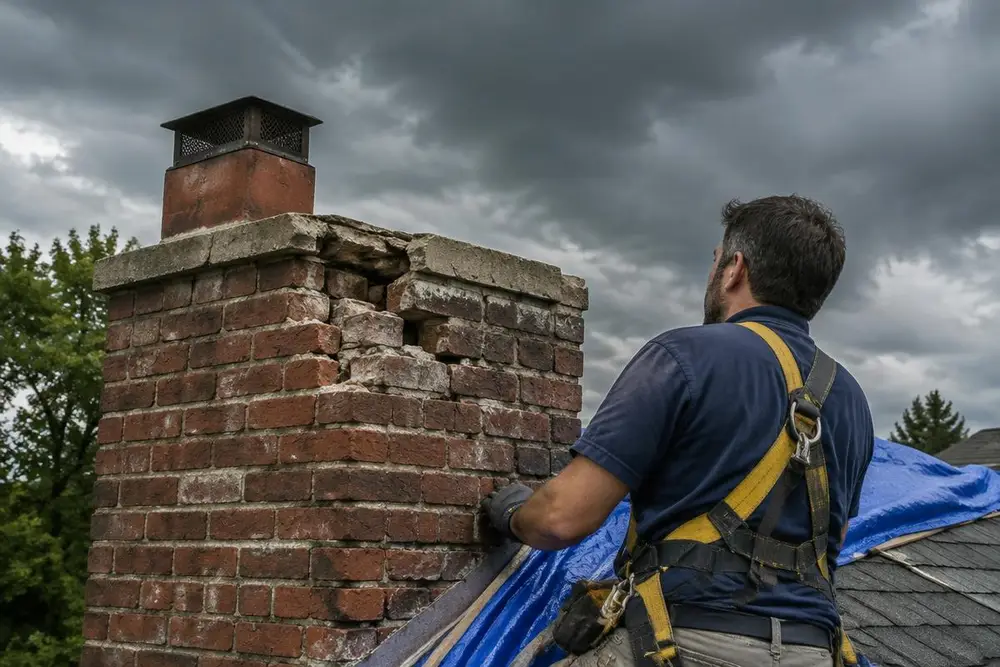
- Cracked exterior masonry
- Discolored or distorted rain cap
- Shingles near the chimney that look scorched
- Smoke escaping through cracks in the masonry or mortar joints
Why a chimney fire matters even if it went out on its own
Chimney fires can reach temperatures high enough to crack clay flue tiles, damage mortar joints and warp metal parts. A damaged flue may no longer keep heat away from the house framing or keep exhaust inside the chimney. The next fire you light could start a house fire.
What happens next: a Level 2 inspection
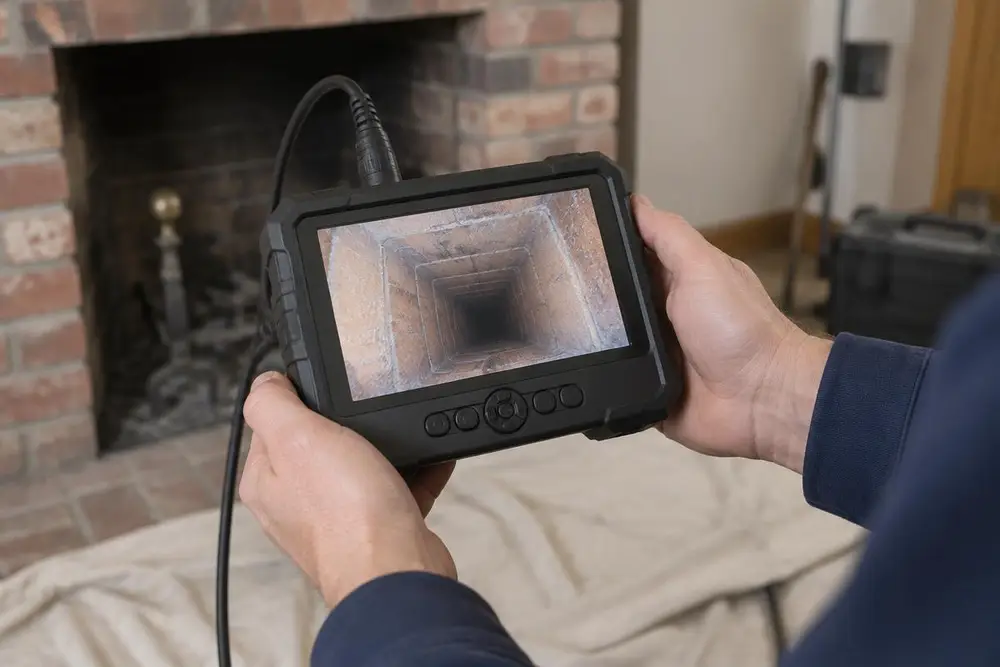
The NFPA 211 standard calls for a Level 2 inspection after a chimney fire, before the chimney is used again. A Level 2 includes a video camera scan of the entire flue, plus checks of accessible attic and crawl space areas near the chimney. It's the only practical way to see tile cracks and joint damage inside the flue.
We document what we find with photos and camera screenshots, which you can share with your insurance company. See Level 2 chimney inspection and chimney fire damage repair.
Common repairs after a chimney fire
- Creosote removal, especially of hardened glaze
- Flue tile repair or, more often, a new stainless steel liner
- Damper and cap replacement
- Masonry and crown repairs
- Smoke chamber repairs
How to reduce the risk
- Have your chimney inspected once a year, as NFPA 211 recommends.
- Have the flue cleaned when the inspection shows buildup — CSIA guidance commonly uses about 1/8 inch.
- Burn dry, seasoned hardwood, not green wood, trash or treated lumber.
- Avoid long, smoldering fires with the air supply nearly closed.
- Install a cap with spark-arresting mesh.
- Keep smoke and carbon monoxide alarms working.
See our articles on how often to clean your chimney and our creosote removal service.
We're available 24/7
If you've had a chimney fire anywhere in Queens, Nassau County or Suffolk County, call us after the fire department has cleared the scene. Don't use the fireplace or stove until it's been inspected. See 24/7 emergency chimney repair.