The liner is the inner wall of your chimney flue — the passage that smoke and exhaust actually travel through. You can't see it from the roof or the firebox, but it's one of the most important safety parts of the whole system. Here's what a liner does, the main types, and when a stainless steel liner is the right call.
What a chimney liner does
- Contains heat so it doesn't reach the wood framing around the chimney
- Protects the brick and mortar from corrosive exhaust and condensation
- Gives the appliance a flue of the right size so it drafts properly
- Keeps exhaust, including carbon monoxide, inside the flue
The NFPA 211 standard addresses chimney liners as part of a safe venting system, and building codes require them for most fuel-burning appliances.
The main types of liners
Clay tile liners are the traditional choice in masonry chimneys and are what most older Queens and Long Island homes have. They hold up well for a long time, but they can crack from rapid heating, chimney fires, settling and water, and the mortar joints between tiles can open up.
Cast-in-place liners are a cement-like material poured or formed inside the chimney. Metal liners — usually stainless steel — are flexible or rigid pipes installed inside the existing flue. We install stainless steel liners.
When you're likely to need a stainless steel liner
1. Cracked or deteriorated clay tiles
A camera inspection often finds cracked tiles, missing sections or open joints in older chimneys. Small joint gaps can sometimes be repaired; widespread damage usually means relining. See flue tile repair.
2. Converting from oil to gas
Gas appliances produce cooler, more acidic exhaust. In an old, oversized clay flue, it condenses on the way up and attacks tiles and mortar. A stainless liner sized for the new appliance is a common requirement when converting. We explain this in oil heat and boiler flue cleaning.
3. Installing a wood stove or insert
Stoves and inserts need a flue sized to their outlet. Venting a small insert into a large fireplace flue can cause poor draft and fast creosote buildup. A dedicated stainless liner runs from the appliance to the top of the chimney. See wood and pellet insert installation.
4. After a chimney fire
Chimney fires can crack clay tiles along much of the flue. After the fire department has cleared the scene, NFPA 211 calls for a Level 2 inspection, and relining is often the safest fix. See chimney fire damage repair.
5. Unlined chimneys
Some older homes — especially Victorian-era houses like those in Richmond Hill and Woodhaven — have chimneys with no liner at all. These usually need one before they're used for any appliance.
Why sizing matters
A liner isn't one-size-fits-all. A flue that's too large lets exhaust cool and condense; a flue that's too small can't carry all the exhaust and may spill it into the home. Sizing is based on the appliance's requirements and the chimney's height. Some installations also need insulation around the liner to keep the flue warm and maintain safe clearances.
How a stainless liner installation works
- Camera inspection of the existing flue
- Sizing the liner to the appliance
- Removing obstructions or damaged tiles if needed
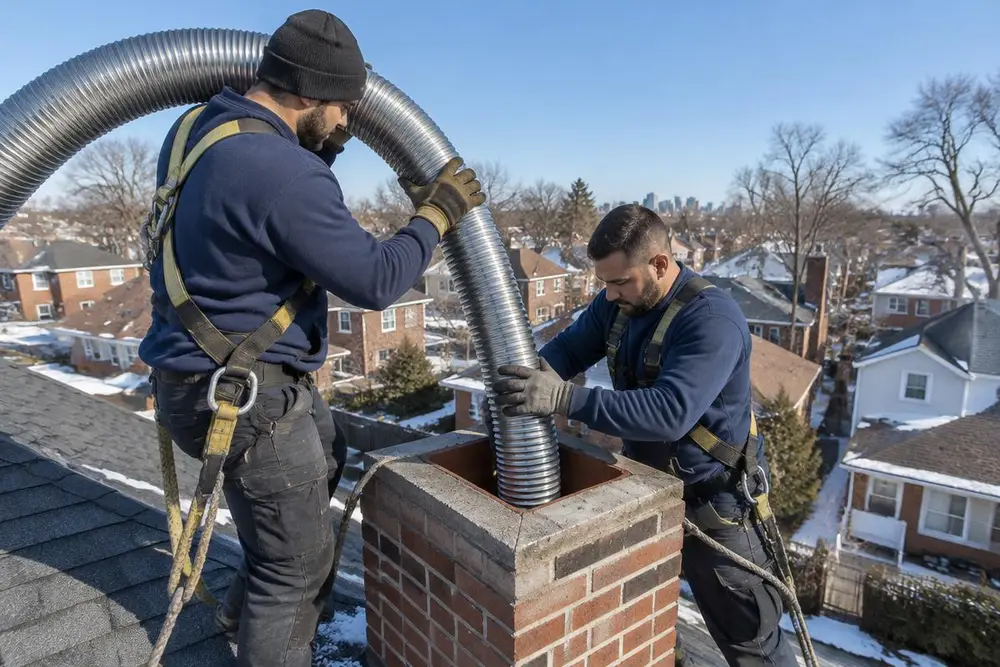
- Feeding the liner down from the top of the chimney
- Connecting it to the appliance and sealing the top with a top plate and cap
- Checking the installation and draft
Signs your flue may need relining
- Pieces of clay tile in the firebox or clean-out
- Persistent draft problems
- Water stains on walls near the chimney without rain (condensation)
- An inspection report noting cracked tiles or open joints
- A planned fuel or appliance change
Not sure what's inside your chimney? A chimney camera inspection shows you. We install liners across Queens and Long Island — learn more about chimney liner installation.